© Roc Pont
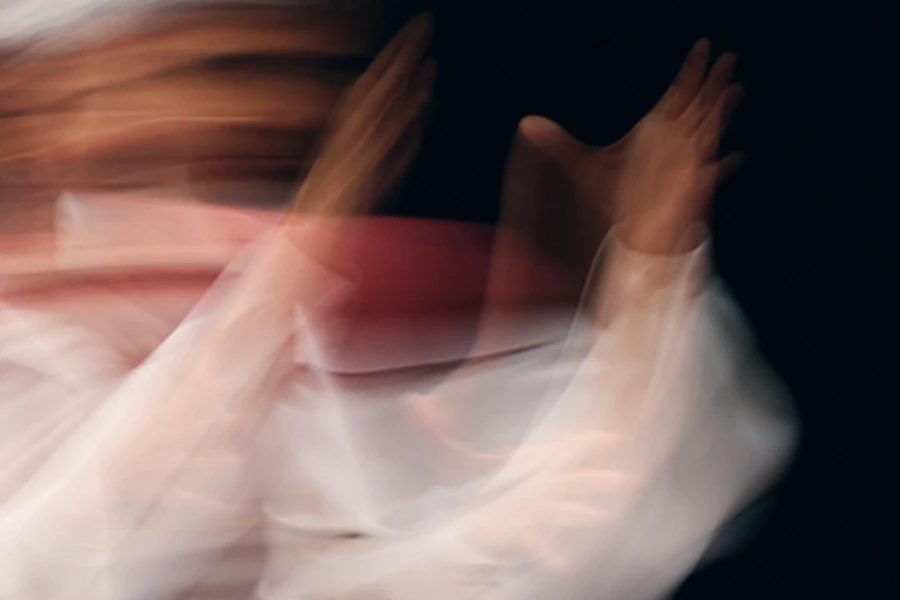
HAPPY END is a stage piece with deaf teenagers, exploring adolescence as a threshold where celebration meets loss and identity forms amid uncertainty. On stage, they gather to create a shared rhythm: not conventional music, but a way of organizing time through bodies, gestures, and attention. In this fragile space, deafness shifts perception and redefines listening and communication. Meaning emerges across sign, gaze, and movement. As stories unfold without closure, the piece sustains motion rather than resolution. In a world that feels unstable, these teenagers insist on being together, inventing forms of relation that keep something alive, even when the future is unclear. Contains strobe lighting and loud noise. Direction & Authorship: Nico Jongen In collaboration with: Berta Frigola Dramaturgy:...
HAPPY END is a stage piece with deaf teenagers, exploring adolescence as a threshold where celebration meets loss and identity forms amid uncertainty. On stage, they gather to create a shared rhythm: not conventional music, but a way of organizing time through bodies, gestures, and attention. In this fragile space, deafness shifts perception and redefines listening and communication. Meaning emerges across sign, gaze, and movement. As stories unfold without closure, the piece sustains motion rather than resolution. In a world that feels unstable, these teenagers insist on being together, inventing forms of relation that keep something alive, even when the future is unclear. Contains strobe lighting and loud noise. Direction & Authorship: Nico Jongen In collaboration with: Berta Frigola Dramaturgy: Roberto Fratini Performers: Laura Galiano, Melih Hayran Lights: Júlia Bauer Sound: Dudu Alves Technical coordination: José Pablo Parra Vargas Sign Language interpreter: Laura Bada Production & administration: Lluís Victory Cirrer, Mariona Signes Coproduction: Bozar Brussels, Fundação Serralves Porto, Teatre Liure Barcelona, Teatro Calderón Valladolid, Nau Ivanow & Ça marche With the support of Casal Font d'en FargasIn the framework of the 'PIT - Perform, Inform, Transform: Participatory Performance in Art Museums' project, co-funded by the European Union.